Private Credit in the United States

History:

  • Following the 2008 Global Financial Crisis, regulatory standards became significantly more stringent (Dodd- Frank Act & Basel III Norms) . In the United States, banks were required to maintain higher capital buffers against riskier loans, reducing the attractiveness of lending to mid-sized businesses. As a result, banks scaled back their exposure to this segment, leaving a substantial portion of the market underserved in terms of access to credit.

This gap in financing was subsequently addressed by the emergence of private credit.
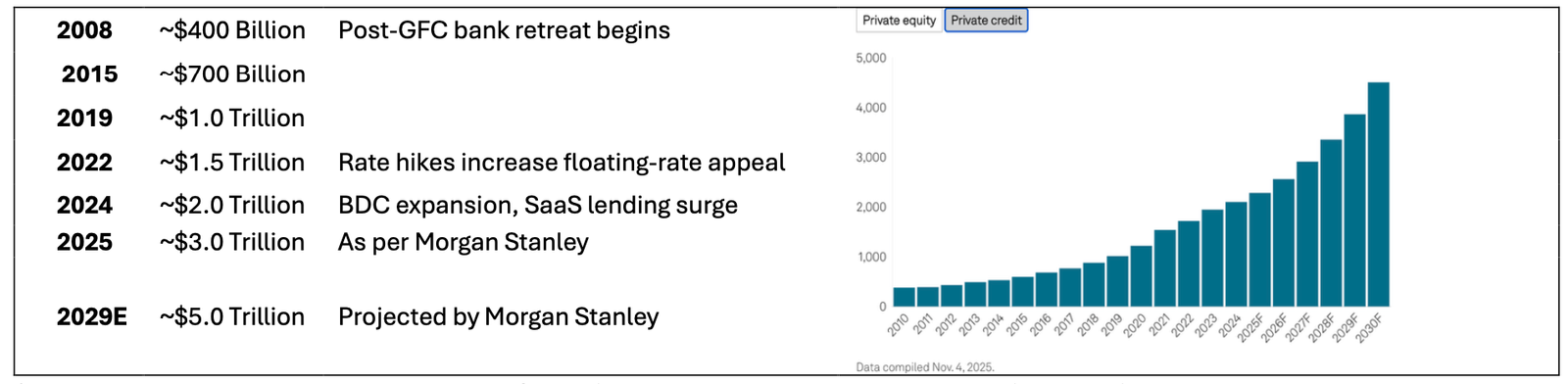
  • Instead of relying on traditional bank lending, mid-sized companies began accessing capital directly from private credit funds. These funds represent large pools of capital raised from institutional investors, such as pension funds and insurance companies, who commit their capital for extended periods.
  • As these investors do not require immediate liquidity, private credit funds are able to deploy capital over longer durations, offer more flexible lending structures, and extend financing to borrowers that fall outside the risk appetite of traditional banks.

Structural drivers : PE-led deal flow, BDC scaling, and strong demand for floating-rate instruments, support the outlook for private credit AUM to reach ~$5 trillion by 2029 (~13-14% forward CAGR), as projected by Morgan Stanley.

Turnaround :  For much of the period following 2008, private credit experienced sustained growth and was widely regarded as a  successful alternative to traditional bank lending. However, recent developments indicate emerging pressures that are beginning to challenge this trajectory.
  1. Rising Interest Rates and Credit Stress
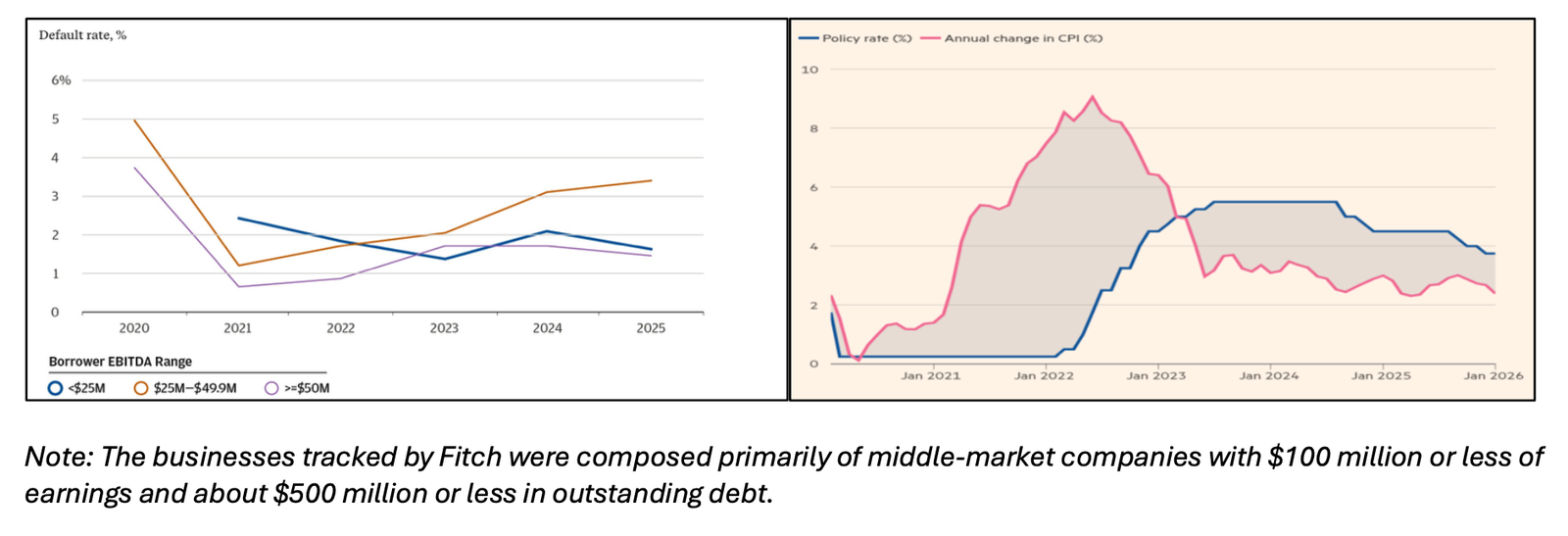
  • The first major challenge stems from the sharp increase in interest rates. Beginning in 2022, central banks implemented aggressive rate hikes to combat inflation. Given that a significant portion of private credit lending is structured on a floating-rate basis, this shift materially increased the debt servicing burden for borrowers. This deterioration in debt affordability has translated into higher default rates.
  • According to Fitch Ratings, the credit default rate in its privately monitored portfolio of 302 companies reached 9.2% in 2025, marking a record high and an increase from 8.1% in the previous year. Out of the 302, 38 defaults were recorded among 28 different borrowers.
  • According to Fitch, much of this increase in default rates was due to the sharp rise in the secured overnight financing rate (SOFR) from near 0% in 2022 to over 5.25% in 2023, with only a modest decrease since then to around 4.5%.
  • The impact has been particularly pronounced among smaller borrowers, with companies generating annual earnings below $25 million experiencing default rates of approximately 13%.
  • Traditional Private narrative excludes softer stress events like PIK interest, maturity extensions, and payment holidays, which effectively amount to selective defaults

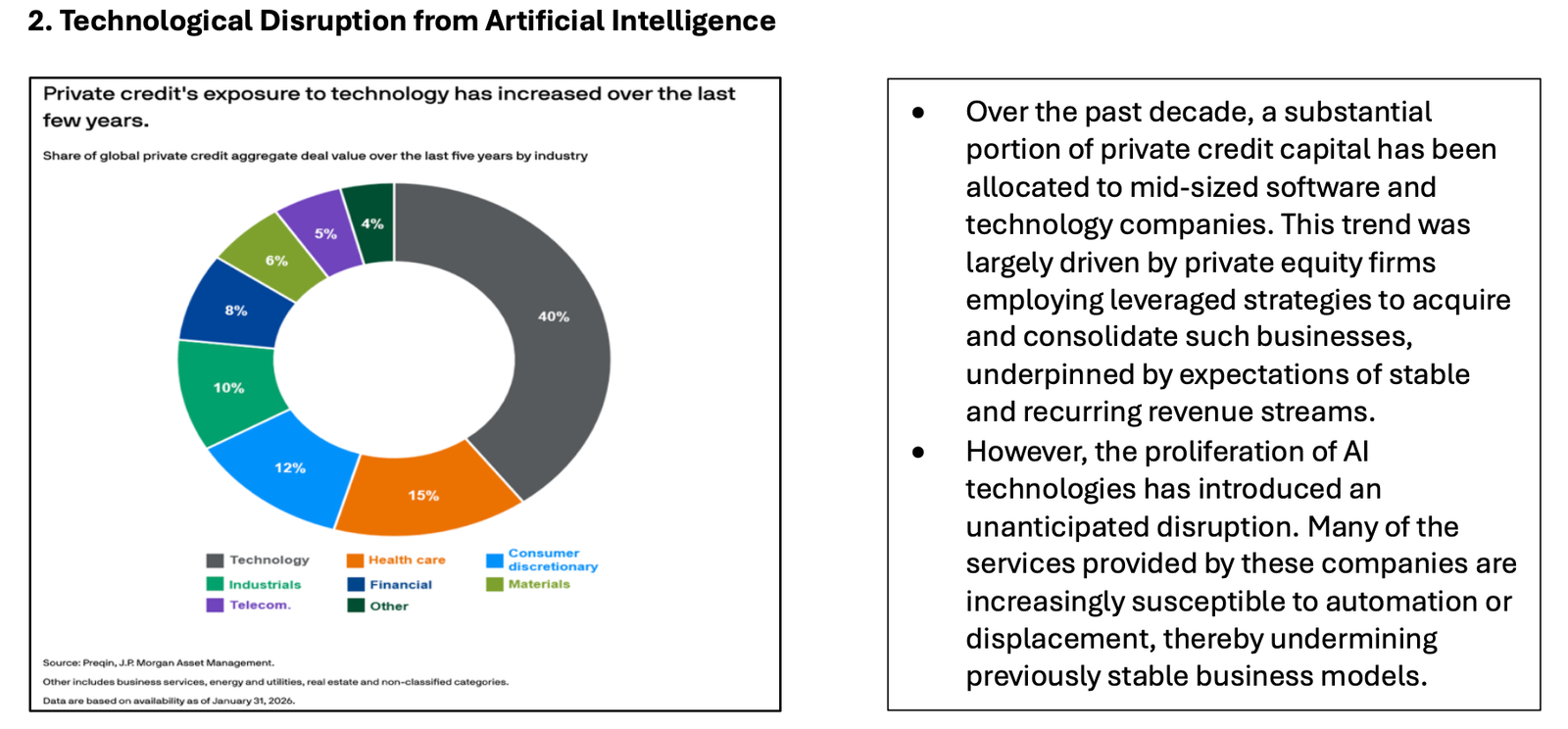
This technological disruption is particularly challenging for private credit due to the inherent asymmetry in its investment structure:

  • Private Equity: Investors retain upside potential. If AI enhances a company’s performance, valuation gains accrue to the investor.
  • Private Credit: Investors have fixed return expectations. They are entitled only to principal and interest repayments, with no participation in upside performance. However, they remain fully exposed to downside risk in the event of borrower distress or default.

Structural Vulnerabilities : Beyond broader macroeconomic pressures, certain structural features of the private credit market are amplifying current stress conditions.
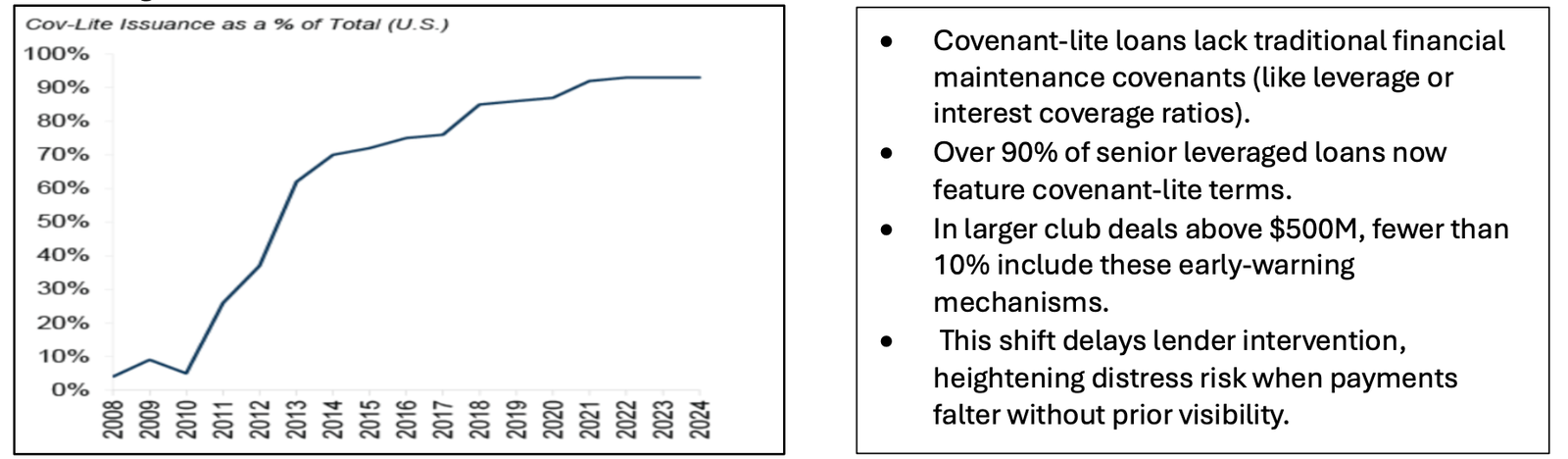
  1. Proliferation of Covenant-Lite Lending : As competition within the private credit market intensified, lenders began relaxing these protections to remain competitive in deal origination
  1. Valuation Opacity and Liquidity Mismatch : Unlike publicly traded securities, private credit instruments are not priced on an exchange and therefore lack observable daily market valuations. Instead, fund managers typically rely on internal valuation models, often maintaining loan values close to their original cost despite changing market conditions.This became more consequential with the rise of Non traded Business Development Companies (BDCs), investment vehicles designed to provide access to private credit for wealthy retail investors.
FeatureNon-Traded BDCPublicly Traded BDC
Investor typeWealthy retail ($25K+ min)Any public investor
Lock-up periodNone (quarterly redemptions)Daily liquidity
Redemption limitTypically 5% per quarterOpen market
Price discoveryNAV (internal model)Market price
Regulatory oversightSEC (public registration)SEC + exchange rules
TransparencyQuarterly filingsDaily/quarterly filings


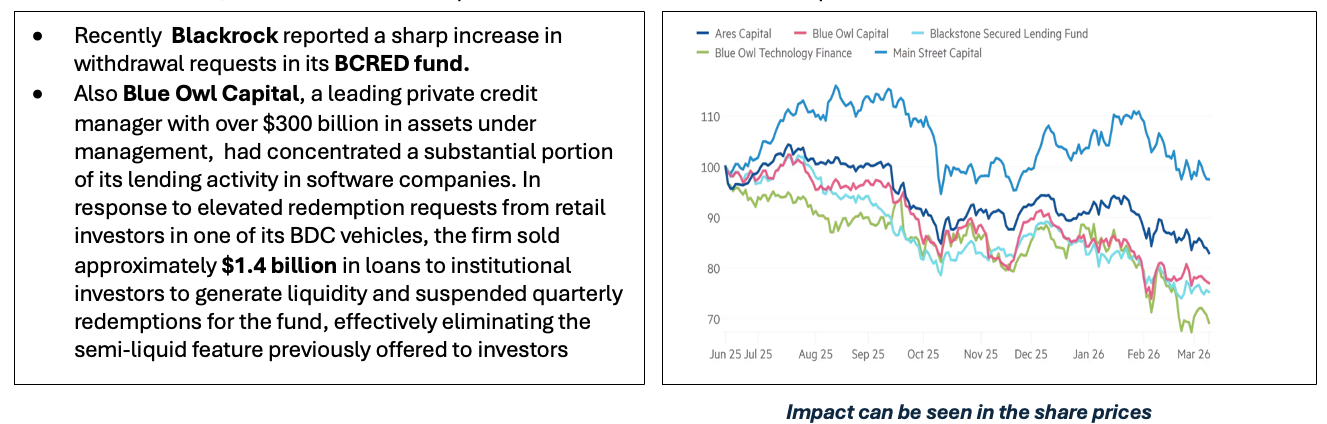
Non-traded BDCs promise semi-liquidity: investors can typically redeem up to 5% of fund NAV per quarter. This worked smoothly when markets were calm. When concern rose about software exposure and valuation opacity, retail investors rushed for the exits simultaneously.

If investors believe the actual value of the fund’s assets has fallen, but withdrawals are still allowed at higher stated values, they are incentivized to exit early. As redemption requests rise and exceed the 5% quarterly limit, funds suspend further withdrawals, which often increases panic and leads to more withdrawal pressure.
 Outlook

  • Private credit is set to scale toward ~$5 trillion by 2029, but the industry is transitioning from rapid expansion to a more disciplined, quality-focused phase amid rising defaults, particularly in the lower/mid-market.
  • While elevated interest rates continue to support yields, increasing credit losses, valuation opacity, and liquidity constraints are driving greater return dispersion, favoring top-tier managers with strong underwriting and sponsor backing.
  • The asset class is not a systemic risk yet, but it is increasingly tied to a “higher-for-longer” interest rate environment.
  • Key risks that may be underappreciated include possible declines in valuations (NAV), higher correlation during stress periods, and potential impact from AI that is not yet fully reflected in credit assessments.

Leave a Reply

Your email address will not be published. Required fields are marked *